Empowering Discussions

When I am a Best Selling Author like John Scalzi

Selling a million books is my long-term goal in life. This isn’t so I can buy a private jet and diamonds or be in the New York Times(though that last bit does sound great). I want wealth to share with others. Because yes buying shiny, fun, or beautiful things feels good, but they don’t last like love, compassion, and sustainable solutions.  I want to be as rich as Scalzi, Oprah, or even that 26-year-old that just sold her millionth Ebook. There are so many great organizations that could use some funds for resources with a little publicity thrown in for their efforts.

However, even on a limited budget I can still help and so can you. One of the most valuable resources needed to help others and improve our communities is completely free. That resource is people. We are the best resource money cannot buy. This Spring I have been working on an initiative to get people involved and inspired to give their time and skills to those in need and those who are offering fulfillment of those needs. My call to action is “Up To You” and will launch next week. I always end my self-defense classes by telling the participants that preventing violence is up to them. Because we truly must be the change we want to see in the world.  That is how I chose this name. The name also inspired me to create this really cute logo which I hope will become as popular as the Nike swoosh or the Life is Good logo…. It could happen. Life is full of possibilities.

You can see how John Scalzi is using his fame and money to support RAINN (Rape, Abuse, and Incest National Network) on his blog. http://whatever.scalzi.com/2013/04/18/gamma-rabbit-t-shirt-donation-update/


WHO IS YOUR FAVORITE DO-GOODER or CELEBRITY PHILANTHROPIST?

🙂

Empowering Discussions

Role Model: Kirin Macapugay of BIBAK Youth San Diego

Preserving and celebrating our culture is a wonderful gift. Culture gives an individual a unique identity and character. It enables us to find value in our lives and gives us a foundation on how to live. Traditions that are passed to each new generation connect older and younger members of family and community by creating common ground. Celebrating our own and other cultures allow us to accept and respect the differences of our world. Kirin Macapugay is preserving her Igorot culture by helping to teach the next generation about their traditions and beliefs through BIBAK Youth San Diego. Aside from passing on traditions they perform and educate other Filipinos and non-Filipino people creating a more accepting and friendly community.

What was your inspiration or what necessitated you to begin this adventure? I am a full blooded Igorota, a term meaning “people of the mountain,” describing the indigenous “tribes” of people from the Philippine Cordilleras. We constitute three percent of the total population. Igorots are historically known for resisting Spanish rule during Spain’s 400 year reign of the Philippines. This was due in large part to the warrior head hunting culture, the mountainous terrain that was difficult to navigate, and the fierce protection of ancestral lands. Unfortunately, this also caused rifts between Igorots and other Filipinos. With little external influence however, we have been able to maintain the same rituals and traditions handed down for thousands of years. To this day, there are challenges for Igorots who still live in the cordilleras. These include a constant struggle to hold political office as well as secure quality education, healthcare, and resources.

The Banaue rice terraces, considered the eighth wonder of the world, were carved into the mountains thousands of years ago by Igorots.  We are also known for cloth weaving, basket weaving, metal works, and adornments.  Music and dance accompany significant life rituals, and different tribes teach their youth particular instrumentation and dance during various life stages. Although my parents emigrated to the United States (via the US Navy) when I was two years old, they continued to practice our traditional rites. My parents taught me about my culture as early as third grade, when my mom dressed me up in a traditional Kalinga tapis (skirt), blouse, and beads for the annual school costume party. She said “no one else will have this, this is unique.” And it was. I was too young to vocalize it at the time, and people just thought I was dressing up as a native American.
I have family pictures of me wearing my traditional tapis (skirt) when I was eight years old. There’s an even earlier photo of me at less than a year old, wearing bongor (beaded necklace) playing in my family clan’s yard in Kalinga, Philippines, where I was born. I was blessed to grow up with unique traditions and cultures, though many times it was not easy explaining these traditions to my other Filipino friends, much less friends of other ethnicities.

BIBAK, which stands for the five tribes of the Cordilleras—Benguet, Ifugao, Bontoc, Apayao, Kalinga–is an organization I consider my extended family. I am both Kalinga (on my mother’s side) and Bontoc (on my father’s).  When I became a young adult, I would assist the younger girls in dressing up in our traditional clothing, coaching them as they danced.  It was a natural transition, teaching the younger ones the way my mom and aunts taught me.

When I became a mother in 2008, I realized I needed to be able to answer the questions my son would have about his heritage. My younger cousins were already asking questions I realized I didn’t have sufficient answers for, like what did the tattoos on my grandmother’s arms, chest, and back mean? What did the music, rituals, customs signify? Why do we spread our arms like wings of birds when we dance?  Why do we consider birds a good omen? Why do we believe our ancestors spirits are constantly present, that they have an active role in our everyday lives?  And why didn’t other Filipinos and Filipino-Americans do/believe the same things? I began delving into the meanings and underlyings of the rituals I knew, which lead me to mapping out my family’s history. I can trace my ancestors back nearly nine generations.  I know that my great great grandfathers down to my father are/were “mingor,” the Kalinga term for exalted warrior.  I witnessed my own father’s datum (warrior ritual) when he returned from the Persian Gulf War, carried out by my grand uncle, a respected elder and scholar. I know that my Bontoc grandmother was a master weaver, that my Bontoc grandfather was a respected sergeant for the Philippine Constabulary during World War II.  I know the great great grandfather for whom my son is named after (we give our children the nick-name of an ancestor, with the belief that ancestor will guard them throughout life) was a warrior, and that my great grandfather was a renowned hunter whom people called “the King of Wild Boars.”  Learning more about my bloodline has been an inspiring reminder of all the history that has occurred to bring me to where I am now, in this point of my life in this corner of the world.

What steps did you take to create your program? I was part of the first round of BIBAK San Diego Youth, in the late 80s when the chapter was formed. We were a small handful, and have various levels of exposure to our respective tribal cultures. Willingness to be engaged and learn the appropriate dances and music differed as well, with the girls being more willing than the boys. Understandably, the traditional wear for boys is much more scant than girls, and the young males at the time were simply not willing to put themselves in traditional loincloths for the public.

Now however, BIBAK San Diego has a large number of youth ages 5-24, the children and grandchildren of the founding members. One of the elders is a lead instructor, and these youth have learned to play a few songs and dances as early as six years old.  In the mid-90s, knowledgeable elders were more visible, displaying ritualistic dances at Filipino-American festivals. These public appearances tapered however, for several reasons, yet we continued to carry on our traditions and performances for our own internal (Igorot related) audiences. In 2008, the same year I became a mom, BIBAK San Diego held a grand “canao (celebration).” It was attended by more than 800 igorot, Filipino and non-Filipino people, with our youth being a highlight of the program, in homage to the theme, “The Beat Goes On.” Public requests for performances for other audiences, particularly our youth, began to grow.

With more performance requests for non-Igorot, non-Filipino audiences came an interest from our youth to learn more about the rituals tied into our dances. During this same time, one our members, Mark Leo, who is Benguet, began presenting his Master’s thesis on Igorot identity (San FranciscoStateUniversity) within the larger Filipino and Filipino-American community. His work shed insight on the sociopolitical history of Igorots, as one of the Philippines indigenous people, as well as critiqued nation state politics. Culture and the preservation of culture should be viewed from a holistic lens of its people. Therefore, we began to teach our youth more about our own unique history as a people.  As for folk art, I made it a point to introduce other traditions including backstrap weaving (a once practical art form dying with the older generations who still remember how to weave), beading, and broadening their repertoire of musical instrumentation and dance from the various tribes. What is unique for us Igorots living in America, is the ability to learn cross-culturally from other Igorot tribes, which is not common practice in the Philippines. I consult with my parents and relatives to help educate our youth, taking advantage of our family gatherings and key life events, e.g. weddings, birth of a new child.

What obstacles were you forced to overcome? I grew up in Paradise Hills, one of the largest Filipino-American communities in Southern California. I heard all kinds of disparaging remarks about Igorots growing up. Sometimes I didn’t have the energy to dispel myths, and even when I did, people would look at me quizzically as if they couldn’t believe I was Igorot. I think in their minds my people really are savage beasts in some remote jungle somewhere. I figure they’ll come to their own enlightenment on their own terms. I am very comfortable in my skin now, and quite proud of my heritage. Instead of being resentful, I see it as my duty to educate others about my culture while I navigate being an immigrant American living in the greater United States society.

Being entrenched in the greater Filipino American civic scene of San Diego, I feel my cultural knowledge has served as an asset. I can trace my lineage back hundreds of years. I indeed descended from warriors, and I do my best to carry that spirit with me whether I’m battling it out at a city hearing or a advocating for a program I know will improve the health and wellness of my fellow Filipinos and non-Filipino neighbors.
Honestly, the only obstacle I have right now is simply not having enough time. J

What were the hardest problems to solve or actions to take? There are certain members of each tribe who are knowledgeable about particular rituals, dance, and music. Staying true to our traditions, we don’t use instruction via things like Youtube videos. These are rituals that must be handed down, taught live, to reinforce the importance of the interactions between generations.  The very interaction of learning how to play certain songs, in the correct “order” and cadence is a learning experience in and of itself. The student, usually a younger family member, must be attentive, listen carefully, and accept his/her order in the family clan’s hierarchy. As s/he gets older, they will then be responsible for teaching younger generations as well.

What must you do to stay operational? n/a. There’s no need to be paid to learn and protect one’s culture.  When we perform for outside audiences, we do ask for a small honorarium (usually $150-300 for at least 12 dancers and a 20 minute performance).  This usually pays for a communal meal after the performance or for traditional clothing that one youth’s family may not have on hand.  For public lectures and discussions, we find venues that are provided to the community at no cost, like the public libraries. Our time conducting these educational lectures is voluntary.

Who, if anyone, helped you succeed? All our family, all the ancestors before us, all those who fought off colonization to protect our traditions.  More importantly, I am blessed to have my parents, who are very knowledgeable and proud of our culture, drilled it into me from day one.  I know many igorot youth whose parents prefer not to be known as Igorot, who can’t shake the shame and ridicule they faced growing up. My parents chose to hold their heads up higher, and passed that pride on to me.

Do you have any advice for readers who want to get involved or start a similar program? Regardless of who you are, where your family is from, or even if you don’t have much family you care to speak to, it’s important to be comfortable in your own skin, and all the things that go with being who you are.  If you feel you would like to learn more about your culture of origin or even if you just want to learn more about your family history, do your due diligence. Speak to your parents, your grandparents, your relatives.  Be the historian for your family, for your people. More importantly, document these things so you can pass the information on.

Learn more at www.BibakSanDiego.net

Follow on Facebook “Bibak Youth San Diego”

  Kirin Amiling Macapugay was born in Kalinga, Philippines, and immigrated with her U.S Navy father and mother to San Diego in the late 70’s.  She grew up in Barrio Logan, National City, and Paradise Hills. Experiencing the effects of rampant gang activities prevalent in Filipino American communities during the 90’s, Kirin was drawn to community work early on, and finished a Master’s in Social Work with the intent of strengthening underserved communities.

  Igorots, meaning “people of the mountain,” are one of the recognized indigenous peoples of the Philippines’ northern Luzon island, from the area known as the Cordilleras.  The five major tribes of the Igorot people are the Benguet, Ifugao, Bontoc, Apayao, and Kalinga, with various sub-tribes. BIBAK San Diego is an organization dedicated to teaching the history and culture of igorot people, as well as preserving and teaching traditions to future generations.  …This interview is from a  book that includes 15 other amazing people who are creating positive change. You can read the full book and buy a copy for you or your school at Bookemon.com

Art, Empowering Discussions

Fully clothed and no stilettos – (in my opinion)

It is the little things that have potential to grow into revolutions and social change, that make me happy. This month I found two fun music videos that I would approve of younger girls watching. What makes them great(in my opinion) are not their catchy lyrics or fun beats. What I noticed was the lack of females wearing barely there clothing or stilettos. Neither of which are wrong for women to wear, but in a society obsessed with showcasing women as strong and or sexy IF and only if they wear hardly anything and or painful shoes, it is refreshing.  This “sexy” image women are sold was so obviously created by men and not for any benefit for women.  I was in dance for years and I never danced in high heels. Obviously some women can and do quite well, but it wouldn’t have worked for my ballet and hip hop classes.

First is appropriate for over 14, “Here’s to Everything” by Misha B. It’s for an older audience because of the seemingly naked(I can’t quite tell) dancing in the beginning which turns into fully clothed dancing later on. She is reminiscent of Janet Jackson in Rhythm Nation. Misha also looks to be at a healthy weight instead of like a twig you could easily snap in two.

http://www.youtube.com/watch?v=nYx4YHXN4Ig

Second is appropriate for any age (in my opinion) “21st Century Girl” by Willow Smith which features many young girls wearing funky, punk/pop outfits, running the streets, building a city, on bikes and skateboards, and having FUN! having fun is what little girls are supposed to do.

http://www.youtube.com/watch?v=AfuHSJqqgAo

Now I write this post knowing that some people will be offended because they read this as an attack on them or that I am saying women should be modest and concerned with whether or not they look “slutty”.  Oh please! As if! and Whatever!  To those people I say get over it. This isn’t about you.  This is a comment on a society that mostly values women as sex objects and little else. This is a blog. It’s full of MY opinions. For some reason and luckily not very often a reader gets mad at what I write. I am not writing for YOU, I am writing for me. If you get something positive out of it great, if not great. Your opinions are yours to hold and not mine to stomp all over so don’t bring that $hit to my blog.

Read all my books at www.Bookemon.com.

Have a Kindle? I have ebooks at www.Amazon.com.

Empowering Discussions

Role Model: Christopher McFadden of Philadelphia Youth Project

How do you get a whole community to change? Violence has become a way of life for many people in Philadelphia, but some residents have decided this must end. Christopher McFadden Jr. is working hard to end the violence that is destroying his hometown. He created the Philadelphia Youth Project(PYP) to rally his community to work together. He wants people to wake up and show the youth that selling drugs and using violence are not their only options. At the time this was published, the first community PYP event successfully took place with speakers and workshops.

What was your inspiration or what necessitated you to begin this adventure? I am Christopher McFadden Jr. I was born, raised, and still reside in Philadelphia, PA. In the summer of 2004 I attended West Chester University of PA and graduated with a BS in Philosophy in 2009. I then went on to attend the University of Phoenix in 2010 and graduated with my Master’s degree in Criminal Justice. Because of my appreciation and vigorous focus on my education, I was blind to the conditions in my community and the digression of the youth in Philadelphia.

When I say, I was blind to the conditions in my community and the digression of the youth in Philadelphia, I mean that I was oblivious to the youth (boys and girls ages 12 – 17) selling drugs, the constant senseless violence, the lack of love and respect for oneself and others, etc. A large number of youth in Philadelphia come from dysfunctional homes with minimal parental guidance. This lack of familial role models plays an important part in a young person’s development. Along with the lack of role models in the family, there is often a lack of any role models. Often, the influencers in the community are also the products of dysfunctional homes. In addition, one of the main problems in Philadelphia that affects the youth is the fact that there is a lack of community. Many neighbors lack a bond with the people who live in their neighborhoods, with little initiative to help them; consequently, the youth suffers.

From August 2010 to June 2012, I was a middle school Special Education Co-Teacher at YoungScholarsFrederickDouglassSchool, that which is located in North Philadelphia. My time being employed at that school and spending so much time in that community was an eye opener. It taught me to appreciate the youth even more than I did and that appreciation gave me the motivation for wanting change in my community. My current focus is community involvement; helping young men focus on academic and social progress. Currently, I am a mentor at OverbrookHigh School, that which is located in West Philadelphia. I mentor young men between ninth and twelfth grade. My mentoring includes social and academic after schools programs, those programs are MAN Up, Homework club, Reading Club, and Fitness Friday.

What steps did you take to create your event or program? Initially, this event (The Philadelphia Youth Project) was going to be a call to action / rally to bring the city of Philadelphia together and speak about the constant violence that is quickly sabotaging our communities. This was event was going to be held on the steps of The Philadelphia Museum of Art. There were going to be influential speakers, poets, rappers and singers at this event. Because of the lack of support, the event didn’t happen. Though this was extremely discouraging, my passion for helping my community progress gave me the drive to keep working to bring this event to life.

I started by changing the focus of my event. I decided that it would more important to focus specifically on the youth. Making the youth a priority is extremely important because they are the next generation and to them inspiration the progress and empower themselves and the people around them, will be a big step toward saving the community. With this in mind, I need to meet with like-minded individuals to assist me with turning this life changing idea into something concrete that will actually change lives. After a few meetings, The Philadelphia Youth Project was planned, then came time for the ground work of getting nonprofit organizations, schools, community organizations, and city officials involved.

At this event, The Philadelphia Youth Project (PYP), there will be poets and a panel of speakers who will emphasize the importance of non-violence and support the positive progression of the youth in Philadelphia. Along with the speakers and poets there will be interactive educational workshops to engage and educate the youth and community members. There will also be companies and organizations that are specifically geared toward supporting the Philadelphia youth. The youth themselves will have the opportunity to sign up with the organizations and/or speak with the companies about volunteer work.

What obstacles were you forced to overcome? In order to be successful, you must overcome obstacles. This is true no matter what endeavor you are pursuing. If you are working on a big goal, I guarantee you that there are going to be problems, issues, and roadblocks along the way.  This is not negative, it is reality.

Because WestPhiladelphiaHigh School is a newly renovated high school, it was a great idea to host The Philadelphia Youth Project there as a way to promote the importance of education. However, I learned that it would be extremely difficult and expensive to host the event at a public school in Philadelphia. When I learned this, I began to get overwhelmed because I was wedded to WestPhiladelphiaHigh School as a venue, when I as planning my event. Fortunately, I was able to get in contact with an administrator at BirneyPreparatoryCharterAcademy, in Philadelphia, PA. After presenting my proposal for The Philadelphia Youth Project to the school’s administration, they gave me the approval to host the event at their school.

Who, if anyone, helped you succeed? Genuine individuals who shared the same passions as me!! I put my trust in quite a few people to help me put this event together but there are only two people that I would give major credit to for helping bring this event to light. The names of those two individuals are Takia McClendon and ShefonNachelle.

Do you have any advice for readers who want to get involved or start a similar program? If anyone would like to start a similar event, research is a must. It is important to know exactly what your goals are and who your target audience is. It is also important to collaborate with others that express similar interests. Collaborating is always good. If your goal is to change the world in the positive way and another group has that same goal, look into working with that group, because eighty hands working together is better than one or two. Collective works brings more people together, brings more ideas to the table, and more people will become aware of the goals that you are working to achieve.

Facebook.com/BlackExcellencexBlog …This interview is from a  book that includes 15 other amazing people who are creating positive change. You can read the full book and buy a copy for your school at Bookemon.com

Please leave a comment mentioning someone creating positive change in their communities?

Empowering Discussions

Role Model: Ryland King of Sprout Up

Ryland King founded Sprout Up to instill knowledge and appreciation about the environment in young children. He is encouraging a new generation to preserve our world. This free program is offered in elementary schools, teaching children in their earliest years of development. Each student starts with a seed they plant and care for during the program. Through games, discussions, and lessons children learn to care for their environment at school and home.

What was your inspiration or what necessitated you to begin this adventure? Two “Thank you’s” started it all.

As junior in high school, I taught at a local surf camp, where I developed a special connection with a developmentally disabled child. In our week-long journey together, the little boy overcame his fear of the shoreline, conquering the surf and finding his passion.

After signing out the last camper, the child’s mom and dad walked up to me, and with a tone overcome with emotion, told me, “Thank you.” Their son had connected better with them that week than ever before, and they were going to continue coming down to the beach to further what had blossomed in their son.

In that moment, I learned that the promise of teaching youth extends beyond the individual student, significantly impacting the lives of parents and the actions of the community as a whole.

Two years later, I was walking out of a 2nd grade classroom after teaching a sequence of environmental education lessons and felt a tug on the bottom of his shirt. I turned around to look into two young hazel eyes staring at me behind coke-bottle-thick glasses and a beaming buck-tooth smile. The girl looking up at me said, “Ryland, thank you,” and embraced me in a heartfelt hug. From that, the vision blossomed.

A group of motivated college students then got together and turned my vision into their mission, and founded Sprout Up–a nonprofit aimed at promoting environmental stewardship throughout communities, from the youngest members of society up.

Since, we’ve journeyed together from our first class of 25 kids to teaching thousands of kids across California, bringing hundreds of passionate friends on board along the way.

Today, it’s the countless “Thank you’s” our team exchanges with kids, teachers, parents, and communities that continues to shape our story everyday.

What steps did you take to create your program?  The first step to creating a program is to get it on paper. Draw it out. After begin showing it to friends and colleagues and continue making new iterations for improvement. In simple terms, this is everything you need to do.

What obstacles were you forced to overcome? In the early days of Sprout Up, the biggest challenge we faced was demonstrating to elementary school teachers, administrators, and parents that we were serious about building a long-term partnership with the school system, and about offering our program completely free of charge.  Since we hadn’t yet proven ourselves, it felt like our youth was actually working against us, as many who agreed to meet with us were skeptical about our commitment and ability to execute on the vision we presented. Once we broke into our first few classrooms, however, perceptions rapidly began to change.

What were the hardest problems to solve or actions to take? Running a nonprofit organization while managing a full university course load over the past three years has taught me a lot about the importance of personal sustainability. It’s been overwhelming at times, but I’ve always remembered to take a minute to enjoy the little things in life, share smiles, and communicate with my teammates with 100% honesty. The most important thing I’ve learned is to lead my team the way I live my life: with compassion, authenticity, enthusiasm, and joy above all else.

What must you do to stay operational? My team and I work hard writing grants, managing membership, donation campaigns, and events. We are working with business professionals on creating a strong business plan for greater financial independence that will launch in the coming year.

Who, if anyone, helped you succeed? Sprout Up wouldn’t be where it is today without the incredible community of supporters that have taken up our cause. I work day in and day out knowing that my team of directors and over 200 volunteer instructors share my vision for creating change from the youngest members of society up. When times get tough, I need only look to this group for the inspiration to pull my head up, press on, and continue doing all that I can to make our shared dream a reality.

Do you have any advice for readers who want to get involved or start a similar program? In the early stages of bringing any idea to reality, it’s easy to get discouraged. Don’t give up! Build a team of peers that share your vision, and communicate regularly to keep each other motivated, focused, and on the same page. Be patient and start small, but never lose sight of your overarching vision.

Add any additional information? No matter what you do, have fun.

Website: www.SproutUp.org

Facebook: www.facebook.com/sproutupfb

Get Involved at: www.SproutUp.org/get-involved…This interview is from a  book that includes 15 other amazing people who are creating positive change. You can read the full book and buy a copy for your school at Bookemon.com

What inspiring people do you know that are creating positive change in their communities?

Empowering Discussions

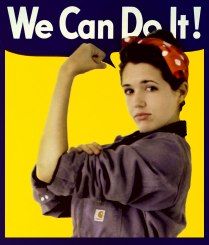
Women Can Do It: Carhartt Celebrates Women Who Work Hard

Carhartt is a simple blog with a strong message. Women Can Accomplish ANYTHING! This celebration of women working hard at jobs that used to be male dominated is my kind of blog. CraftedinCarhartt.Wordpress.com

Like Tori Bortman who teaches bike mechanics:  http://craftedincarhartt.wordpress.com/2013/03/21/tori-bortman-from-gracies-wrench/

The women of  Dalby Ranch: http://craftedincarhartt.wordpress.com/2013/03/13/the-women-of-dalby-ranch/

Nancy Pizarro of Circa Ceramics: http://craftedincarhartt.wordpress.com/2013/02/04/nancy-pizarro/

The only thing this blog is missing is some diversity. Why does that matter? It’s important to me because I grew up in a multi-racial family and have certain expectations. So I scoured the web and found a whole TWO more women doing their own thing while breaking stereotypes. 

Pasiana Rodriguez is a mechanic in New York:  http://voicesofny.org/2012/05/running-the-shop-with-a-mechanics-expertise-and-a-womans-touch/

Scraps of Color women say “We are ALL a color!  What color are you?”:  http://www.scrapsofcolorespire.blogspot.com

If you know of women who work hard in male dominated “hands on” fields, please leave a comment and I will include it in the post with credit to you.

Read all my books at www.Bookemon.com.

Have a Kindle? I have ebooks at www.Amazon.com.

women entrepreneurs, women working hard, hard working women
Crafted In Carhartt wordpress blog


Empowering Discussions

Role Model: Katia Gomez of Educate2Envision

Education has proven to reduce poverty, increase life expectancy and create more community involvement. If you can read this book you are lucky because you were given an opportunity to learn. Katia Gomez understands how providing education can help not just an individual, but whole communities, and future generations. Starting in Honduras she has created a program that provides mentors, an informal library system, community involvement, high school, and adult school. Beyond education her presence has encouraged a whole community to work together and take control of their future.

What was your inspiration or what necessitated you to begin this adventure? My inspiration was planted in my mind as a young girl. As the child of a single parent, resources were always scarce and financial hardships came upon us consistently. Towards the end of primary school, however, a member from our church decided to sponsor me all the way through university and it was this priceless gift that led me to Honduras during a study abroad trip, sparking the impetus that would become Educate2Envision. It was during my trip of 2009 that I met a young girl from the village we worked in whose presence stuck me with the whole way back to the US. I decided to try and sponsor her through school and I learned that she was an orphan and at age 12 had been pulled out of school to work. I saw in her a future that was being stripped away simply because she did not have the financial means to decide her own fate. But I had been incredibly lucky to be in the shoes that I was in – to be the college volunteer visiting a new country and able to give back to the world; it was a luxury she did not have. For this reason, I knew that I needed to at least put forth an effort, no matter how small, to help change the course of her life and the many others I had yet to know.
 
What steps did you take to create your program? When I arrived back home from Honduras, I immediately began my research to understand the larger scope of the education problems affecting the country. I met with professors in the field and NGO technical staff who were experts in this area and could provide me with a knowledge base that I then worked off of to begin designing Educate2Envision’s programs. The library became a place that I found myself in frequently reading “how to” books on starting and running a nonprofit organization. I used these materials to help me understand enough of the lengthy paperwork process to file in 2010 and officially become an organization. Once I had things in place at home, I headed back to Honduras to revisit the same community and held meetings, collected more data, and learned from the stories of the local families that education was a necessary tool to change the course of their lives.
What obstacles were you forced to overcome? I was met with a lot of skepticism and doubt at first by the local government who believed that the community I had chosen was a lost cause and would be unresponsive to our efforts. Even some of the local teachers expressed a disinterest in providing the community with a greater level of education basing this on their belief that they would not take advantage of the opportunities presented to them. This was tough to hear after so much time spent in preparation to assist this community, but we triumphed through the pessimism to prove them wrong. We also struggled with funding, being an unknown group of recent college grads, it was tough to fundraise sufficiently for the ambitions that we had. We held countless bake sales just to ensure we could sponsor our students through the first years of high school.
 
What were the hardest problems to solve or actions to take? The hardest actions to take were probably those relating to our adolescent girls because of how time-sensitive of an issue we were dealing with and still are today. Finding a girl in the nick of time before she is married off to an older man or becomes pregnant before even reaching 14 years old is a major challenge. Not only must we first find these girls, who are hard to reach in rural villages that we work in, but we must then convince them and their families to forego early marriage and choose the path towards education instead. There are monumental societal barriers and preexisting mindsets that come in to play that can deter progress. Although we are able to create access to higher education for these communities that live in poverty, the hardest obstacle to confront on a daily basis is the belief system and lack of self-esteem many children suffer from.
What must you do to stay operational? A dedicated and dynamic board of directors is essential to any sustainable organization especially a small start-up without much paid staff. You need these people who not only believe in you as a person but in your mission whole-heartedly. For our organization, we also thrive off of partnerships both here at home and in Honduras where we operate because it is such an essential tool for growing your programs and collaborating with other great establishments to increase your impact.
Who, if anyone, helped you succeed? Having my core staff in the beginning helped me immensely because running an international organization can never be a “one woman” job. Having support from them and professors from my university instilled confidence in me and gave me the positive reinforcement I needed to carry through my projects. I believe that it helps to have people who remind you to redefine success in your mind, as a young entrepreneur, so that you can savor the small victories and not be held hostage by the most ambitious goals that will undoubtedly take more time to achieve. The first success to be celebrated is any first step taken towards action.
 
Do you have any advice for readers who want to get involved or start a similar program? My advice for future social entrepreneurs can be summed up in one word: patience. Patience with the rate as which your programs grow, patience with the recognition you may strive for, and most importantly patience within yourself as a human being. I believe that it is so important to remember that we are not in a race and to stray away from a “contest-mentality” in which we feel the need to win each and every time. If you want to succeed with your endeavors, keep those you aim to help at the heart of all you do because distractions will make an appearance, whether it be notoriety or bureaucracy or other pressures, remember why you started this. Remember the first moment that the light was ignited and then move forward with patience.
 

Volunteer or find an internship at www.Educate2Envision.org

Facebook.com/Educate2EnvisionInternational

Follow on Twitter @E2Envision

HOW WOULD YOU EXPLAIN TO A TEENAGER HOW EDUCATION IMPROVED OUR LIFE?

Empowering Discussions

Role Model” Frank Baird of “Walk A Mile In Her Shoes”

Great ideas come from crazy places.  Like how combining high heels and the expression of how “you don’t know a person until you have walked a mile in their shoes” could spur a movement to get men involved in ending sexual and gender violence.  “Walk a Mile in Her Shoes”  is a public walk fundraiser that requires men to walk one mile in a pair of high heels. Frank Baird founded this walk after years of working with victims of violence. He started this “international men’s march to stop rape, sexual assault, and gender violence” so that communities could talk raise funds for rape crisis centers in their communities. By publicly denouncing violence against women whole communities can end this problem, help victims, and have real conversations about the effect violence has in their homes and on the streets. Whether a victim of sexual and gender violence or someone blind to the problem, together we can create positive change. Please pass this blog post on to every man, and teenage boy you know. Let’s encourage more males to stand up against violence and help make our communities safer. Thank you.

What was your inspiration or what necessitated you to begin this adventure? Most perpetrators of sexualized violence are men, but most men are not perpetrators. I was working as a therapist at a rape crisis center that helped women overcome the negative effects of sexualized violence. The organization had a prevention education program, but it was small and the typical didactic information spoken at people instead of with them. Experiential education is much more effective than didactic information, so I wanted to create an education program that was dramatic, impactful and could reach more and more men, something with publicity power. Typical prevention education programs require an organization to actively outreach. If we could develop a program that was so interesting people would seek us out, we could spend more time educating rather than looking for opportunities to educate.

What steps did you take to create your program? We wanted to create an opportunity for men to want to become involved in efforts to end sexualized violence. We wanted to avoid traditional didactic information that “talks at” instead of “with.” We wanted to create an experience that has greater impact and memorability than simple didactic information.

We thought it would be fun to use the metaphor, “you can’t really understand a person’s experience until you walk a mile in their shoes,” and have men literally walk one mile in women’s high heeled shoes. Patti Dengler and I explored and developed how it would work, how we would insure that men and onlookers would have the experience we intended and get the messages we intended. Then we pitched the idea to small groups of women and men. We wanted to get the first reaction when someone heard about this. When that went well, we enlisted the aid of a local rape crisis center and organized the first Walk a Mile in Her Shoes® Event in 2001 in the San Fernando Valley in California.

Following the first Walk Event, the enthusiasm of the organizers and the participants spread throughout California as everyone talked about the event and and their experience of it. Walk Events began in California, then in a few other states and Canada. Once we put up a web page where people world-wide could get information on the Walk and see pictures of men in heels that legitimized this effort, the momentum gained exponentially.

What obstacles were you forced to overcome?

Obstacles we overcame:

• Uncertainty that this was a good idea.

• Uncertainty that this idea would actually get men involved in ending sexualized violence.

• Uncertainty that this idea would be understood as a sincere effort and not parody.

• Uncertainty that men would actually learn something from the experience.

• Uncertainty that this idea would actually raise funds for local rape crisis centers or domestic violence shelters.

• Recruiting local rape crisis centers, some of whom were suspicious of men who claimed to be interested in helping with this cause.

• Making sure the press got the intended message and did not distort or mis-report.

• Figuring out how to coordinate world-wide efforts with next to no money and nearly no staff.

• How to expand the message and effectiveness of Walk Events.

• Making money for headquarters in addition to all the local organizations. Ok, we haven’t overcome that obstacle yet. Except for registration fees and a few donations here and there, all the money raised by Walk Events goes to the local rape crisis center or domestic violence shelter beneficiary. We are still trying to figure out how our headquarters can earn more money so we can further develop the Walk and its effectiveness.

What were the hardest problems to solve or actions to take? The hardest problem to solve has been coordinating world-wide efforts with an extremely small staff at headquarters. We have managed to automate some tasks, but we continue to have to manually process Walk Event registrations, personally return lots of phone calls and emails, both from would-be and ongoing organizers and press.

We must also follow up to make sure no one is organizing an unauthorized Walk Event or taking our idea and using it to raise funds for some other cause like breast cancer. While we respect the efforts being made to raise awareness and funds for breast cancer, our Walk is specifically designed to raise awareness and funds for chronically underfunded rape crisis centers and domestic violence shelters.

What must you do to stay operational? Staying operational requires diligent ongoing work to keep our project in circulation, maintaining its relevance, improving it and expanding its effectiveness, both as an educational program and a fundraiser. We receive little income ourselves, All monies raised by a Walk Event goes to the local rape crisis center or domestic violence shelter beneficiary. We only make money on Walk Event registrations (to pay for staff to process the registrations) and donations. Because we operate with little money, it requires us to continually be inspired by the efforts of organizers around the world to keep us dedicating far more hours than we will ever be paid for. These kinds of projects require ongoing heart and community to support the meaningfulness and enthusiasm.

Who, if anyone, helped you succeed? The most outstanding contributor has been my wife, Patti Dengler. She continues to both inspire me and provide valuable strategic and logistical support. She is the former Executive Director of a Rape Crisis center and a master at organizing and networking.

Bernie Fatla at LeDame Shoes has made sure our Walk Events have women’s high heeled shoes in men’s shoe sizes.

The greatest contributions have been made by the many many organizers world-wide who have taken up this campaign in their own communities. Small Walk Events and large Walk Events are happening world-wide because because local organizers have recognized this campaign is a great way to involve men in efforts to end sexualized violence, to educate their communities about causes, remedies and treatments for sexualized violence and to raise funds for their local rape crisis centers and domestic violence shelters. Without those enthusiastic, dedicated and hard-working individuals and organizations, there would not be an International Walk a Mile in Her Shoes®. Sharing their ideas, experiences and photographs have generated interest and built networks that have lasted well beyond their Walk Event.

Do you have any advice for readers who want to get involved or start a similar program? If by “similar program” you mean “something that will excite and involve the world in doing good,” then I’d say, search your heart for great compassion. Where you find it, take action. Don’t take action alone, though. You can gain strength and momentum in community. Find like-minded individuals and communities. Excite them with the possibilities of your ideas and invite them to join you in taking action. Starting your project, then, will be the least of your accomplishments in transforming the world into a better place. Get involved at WalkAMileInHerShoes.org

Walk a Mile in Her Shoes® is a project of Venture Humanity, Inc.

32119 Beachlake Lane, Westlake Village, CA 91361

www.walkamileinhershoes.org

Phone: 800/604-1218, Fax: 888/688-1274

Walk Event Calendar: http://www.walkamileinhershoes.org/calendar.html

Join us on Facebook: http://www.facebook.com/pages/Walk-a-Mile-in-Her-Shoes/128826218866?ref=ts

Follow us on Twitter: @WAMIHS

Register to Organize a Walk Event: http://www.walkamileinhershoes.org/Organizing_Instructions/organize.html

Complete Your Post Walk Report: https://www.surveymonkey.com/s/Organizers_Post_Walk_Report_v13  …This interview is from a  book that includes 15 other amazing people who are creating positive change. You can read the full book and buy a copy for you or your school at Bookemon.com
Empowering Discussions

Turn Exercise Into an Adventure

Exercise should be enjoyed.  When I am active I notice how good my body feels and that makes my mood happy. Why participate in exercise that is boring when you can move your body and get healthy by having fun! One thing I love about taking walks is that I can bring my camera with me and turn it into an exploration. My favorite pictures are of murals, the ocean, funny signs, crazy tricked out cars, and unique houses. I notice new things all the time.  

 Last Friday I took a leisurely walk(4 miles round trip) from south of the pier to the harbor. On this walk it had been sprinkling. I was walking south when a woman walking towards me suddenly said “You have to turn around and check out that rainbow” I did and it was gorgeous. I was floored that this complete stranger was kind enough to share it with me.  Each walk brings a new person to greet, new scenery to  enjoy, and a revived feeling from moving around and searching or a happy surprise.

Oceanside3.13

How do you make fitness fun?

How does exercise make you feel?

When was the last time you took an adventure?

🙂

Read all my books at www.Bookemon.com.

Have a Kindle? I have ebooks at www.Amazon.com.


Empowering Discussions

Role Model: Nakisha Varlack-Harris of Girl Power United

 Life is full of  confusing or scary experiences disguised as lessons. This can be hard to understand when we are young.  With the help of an older wiser mentor we can learn to be aware of how our choices guide us and see that mistakes are simply part of how we grow. When we don’t have anyone to show us the way we tend to flounder and become afraid of life.

One of the great joys of being an adult are the times I get to help or advise the younger people in my life. I love being able to share with them different options and healthy choices. It’s rewarding and fills me with a sense of security when they make smart choices. Nakisha Varlack-Harris understands the importance of mentoring and that is why she created Girl Power United.  Along with a wonderful group of volunteers she guides and empowers the future women of our world.


What was your inspiration or what necessitated you to begin this adventure? 
My vision for Girl Power United was ignited by my passion to inspire girls by enabling them to recognize their inner ability to achieve greatness and reach their full potential. My two daughters are also a source of inspiration as I prepare them to meet society’s challenges while reinforcing positive attitudes and behaviors. Simply stated Girl Power United was conceived out of a fervent desire to inspire and empower girls regardless of ethnicity, cultural, or economical standing.

Committed to liberation through self-empowerment, I strive to motivate, empower, and inspire girls from all walks of life. Girl Power United has enabled me to touch the lives of many young women while encouraging them to have the mindset to view their aspirations as possibilities.

What steps did you take to create your program? The first step of creating Girl Power United was having a vision and a purpose. Through this vision, we were able to expand the program by simply finding a group of girls that were interested in changing their lives by being empowered. Various activities and events were scheduled that kept the interest of teen girls within the community.

Obtaining our 501c3 status was also important for the purpose of being recognized as a tax exempt organization. Social media and the internet also played a major role in getting our message out to the public. Having a quality website and reaching out to the younger generation through social media was a successful tool in recruiting new members.

What obstacles were you forced to overcome?  One of the most challenging obstacles to overcome was obtaining the non-profit 501c3 tax exempt status. It required a great deal of time and attention. Through persistence and great diligence, we were successful in gaining recognition as a non-profit organization.

What must you do to stay operational?  To stay operational, Girl Power United must keep the interest of our teen members, but also the interest of our adult volunteers. It is important that our volunteers feel a sense of purpose. It is difficult to juggle family, work, school and other obligations that our volunteers have, but a few hours a month can make a huge difference in the life of a child.

Individual donations and corporate sponsorships are crucial for our economic survival. Each dollar donated is a powerful gift that brings us closer to our goal of empowering the life of another teen girl.

Who, if anyone, helped you succeed?  GPU is a non-profit volunteer led organization that focuses on positively empowering the lives of young girls between the ages of 12 and 19. The GPU staff and team of volunteers work to inspire teenage girls from all facets of the community to view their aspirations as possibilities to achieve greatness. The entire GPU staff continues to unite a coalition of empowered minds to produce the next generation of educated and successful young female leaders.

The Co-Founder and Executive Vice President, Charmin Rickards was also very instrumental in helping Girl Power United succeed. Ms. Charmin Rickards joined GPU as a Co-Founder in 2011 and eagerly took on a leadership role. Inspired by the vision and mission of GPU, Ms. Rickards embraced the core values and the worked diligently towards establishing a solid foundation. Her primary inspiration is to build and leave a legacy for her daughter as well as the desire to ensure that she is prepared through education, mentorship, and awareness. She believes that exposure to different programs will inspire teens and provide a resource to opportunities that may not have been available to them through other means.

Do you have any advice for readers who want to get involved or start a similar program?  To get involved is as simple as making a commitment to serve as a volunteer or signing up as a member. Additionally, for those that are interested in starting a similar program, the best advice is to never give up on your vision. Embrace the vision and put it on paper. Outline the steps that need to be taken and create a check list and follow it to stay organized. You will find yourself working through the checklist and coming that much closer to forming a successful organization. Get involved at GirlPowerUnited.org and on Facebook.com/GirlPowerUnited

Girl Power United, Inc. 4196 Merchant Plaza Suite 343, Lake Ridge, VA 22192

Email: Info@GirlPowerUnited.org  Phone: (757) GPU-0300

Check out this other article about GPU http://www.tidewaterwomen.com/featured/february-2013/heeding-the-call-mentoring-our-youth  …This interview is from a  book that includes 15 other amazing people who are creating positive change. You can read the full book and buy a copy for you or your school at Bookemon.com